Interactive Museums
last updated 2026-07-25 21:19:07 by Simon Vandevelde
I've been in Lisbon for a conference this past week, and on my first day here I stumbled across the "Museu do Dinheiro", or Money Museum in English. As a lover of rather niche museums, of course I went right in! If you're ever in the area, you should be sure to visit it. It's filled with interesting information on the history of money (including its production throughout the ages), and also contains many antique coins that are marvellous to look at. But, for this blog post, I'd like to highlight one thing in particular: the high number of quality interactive displays!
Interactive museum displays are incredibly fascinating to me, and have so far always improved my museum experiences. I mean, why show down your information as boring text, when you can do something fun with it? For instance, right after getting your (free!) ticket, you are greeted by this guy:
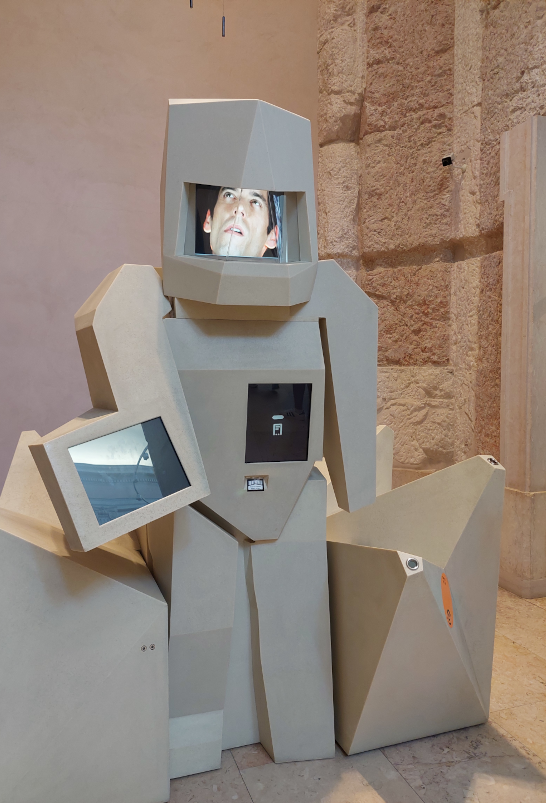 Bartering golem
By sticking your ticket in his navel, he starts talking (in the language of your ticket) about how societies evolve money, as a way of streamlining bartering. In the pillars next to him, you can see some of the first coins ever used(!) by looking through lenses that act as magnifying glasses. I can imagine that to impatient children, this way of presenting information makes it feel much more like some kind of exploration, tickling more of their senses to keep them better engaged.
After the golem comes this room with a huge screen, and three giant wheels:
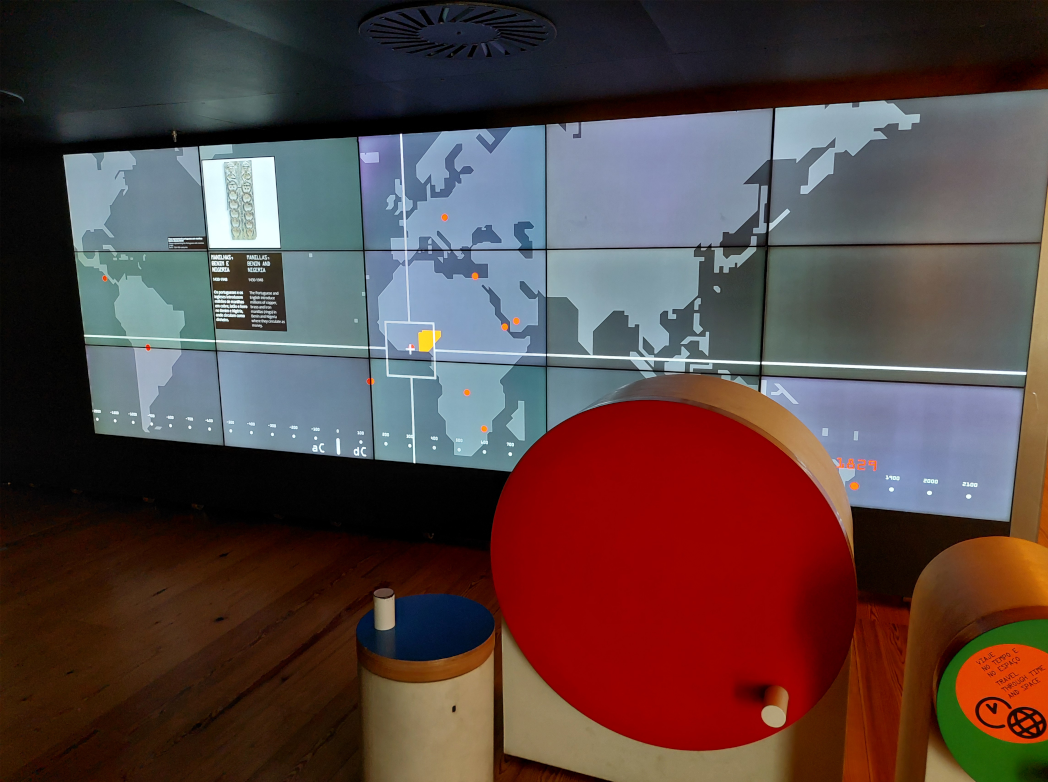
This map can be used to learn about some interesting physical currencies of the world, throughout history. By rotating two of the wheels we can control the cursor's x- and y-position, and the third wheel allows us to cycle through time. How insanely cool! Again, they could've just put up a boring list of pictures and text, but instead they created this physical interface that makes it more engaging.
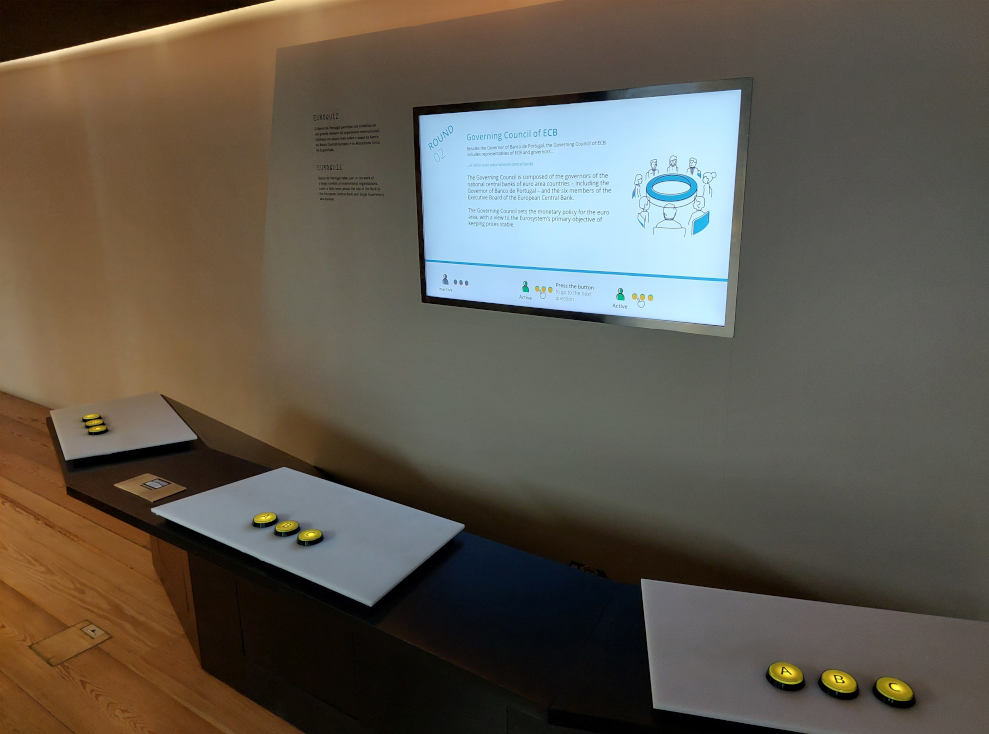
The museum had much more in store, though. How about this multi-person quiz, reminiscent of a game show, allowing you to compete to get the right answer?
Or this information screen on global import/export, where you could scan a barcode scanner to select the item you wanted to learn more about?
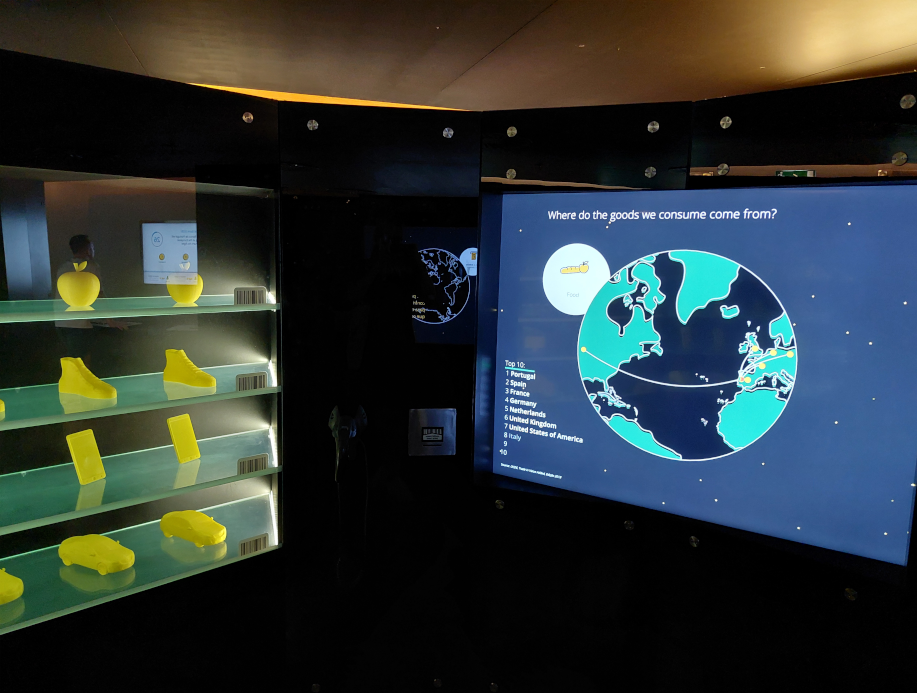 Small barcode scanner hanging from the wall, somewhat visible in the center of the picture.
These types of displays make a lot of sense to me. In fact, I think that, secretly, building such interactive "human-museum" interfaces sounds like my dream job. It combines three major things I love doing:
- Making information more understandable, to children and adults alike
- Developing mixtures of software, electronics, and physical interfaces, applying engineering methodologies to build increasingly better prototypes
- Thinking creatively, and out-of-the-box
This also shows in one of my favorite research projects, FOLL-E, where we build a physical, interactive toy to teach children better logical thinking. At the same time, I'm fairly sure it'd be hard to make a job out of this. There's only so many museums, and many of them probably don't want interactive displays anyway. Why not?
I think one of the best downsides of interactive displays is summarized in this image I also took at the Money Museum:
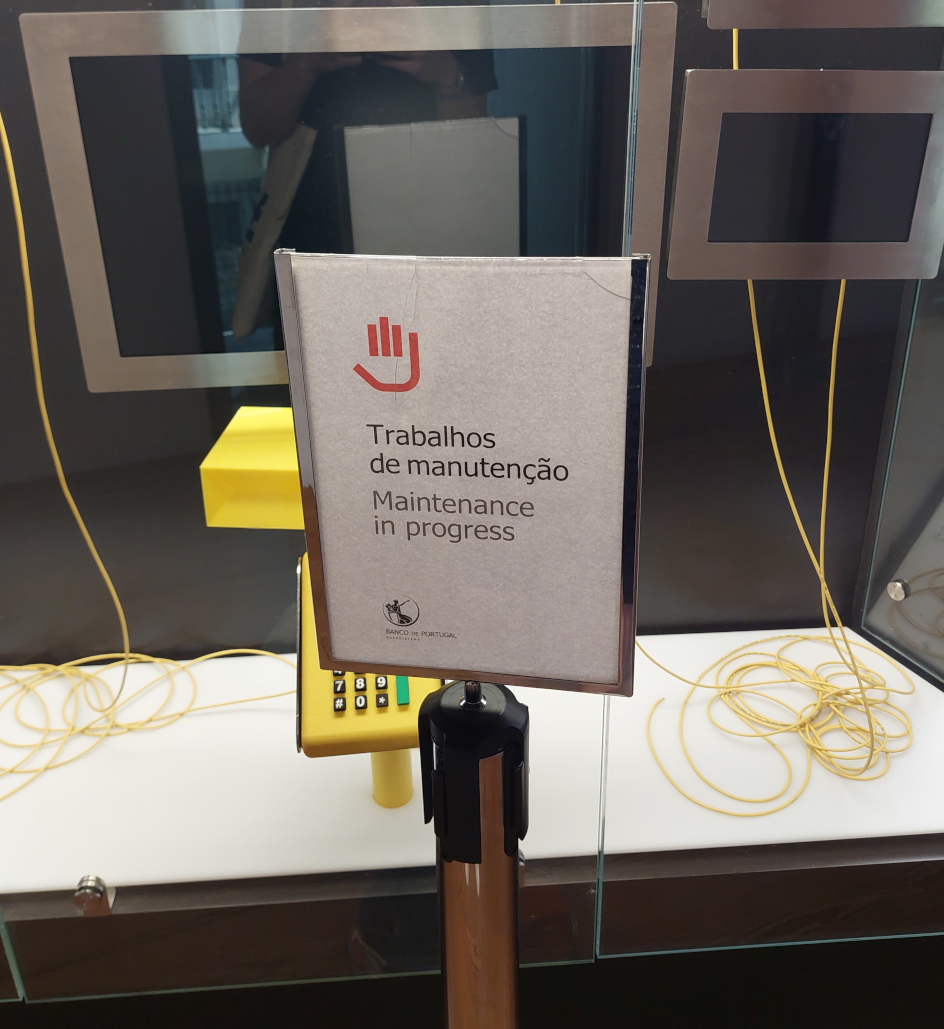
Obviously, these things take time and effort to maintain, especially when the displays are mainly meant for children. This one had a calculator-like keypad, which I assume got broken by too many enthousiastic fingers tapping all over it. Similarly, this cool ball-thingy was temporarily out-of-order, as one of the balls got stuck. :-(
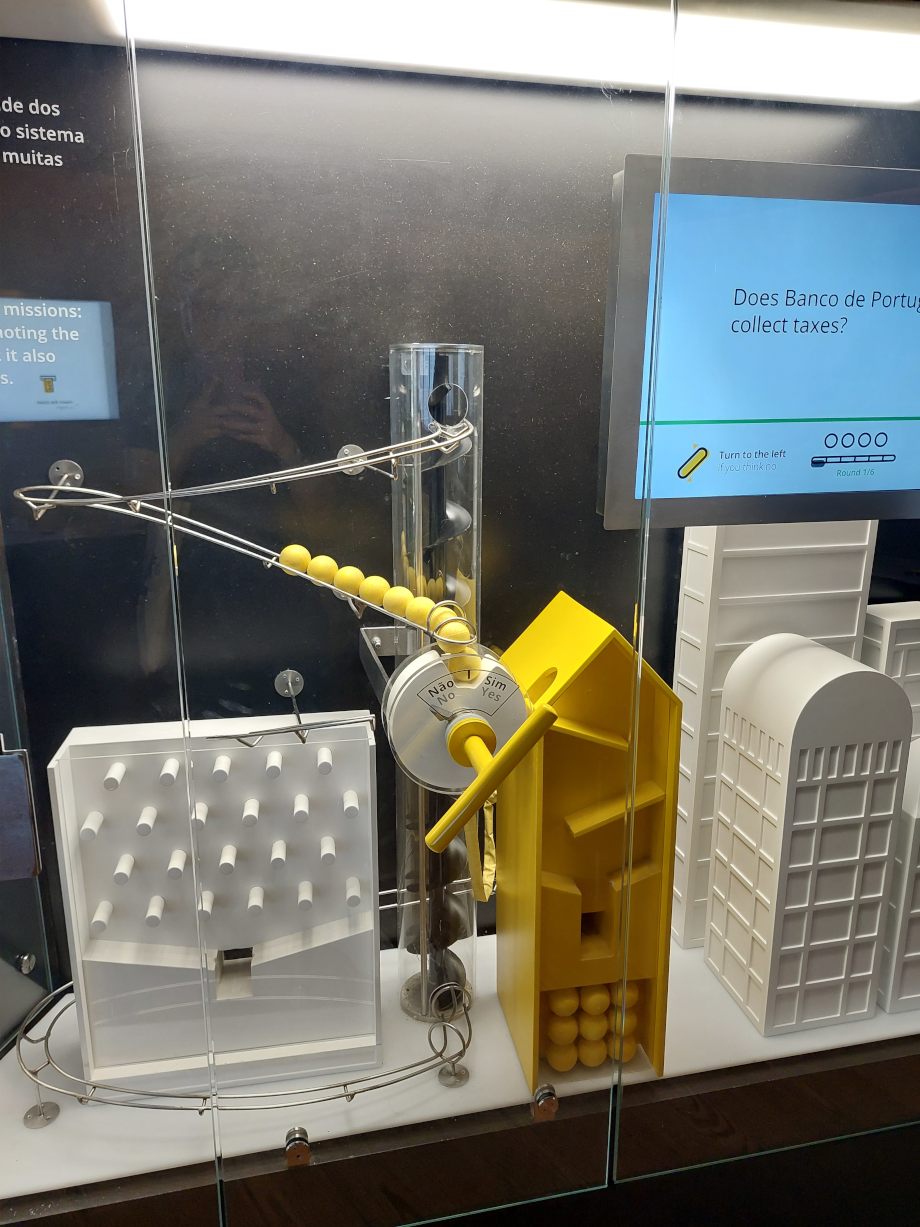
On top of that there's the cost and effort required to initially come up with a good idea. Still, I think that more museums should try to offer these types of things! And of course, it doesn't have to include a digital component. Many science museums, for instance, will have tons of fun ways to demonstrate physical laws! One thing's for sure: if I'm ever in Lisbon again, I'm revisiting the Money Museum. :-)